1800s

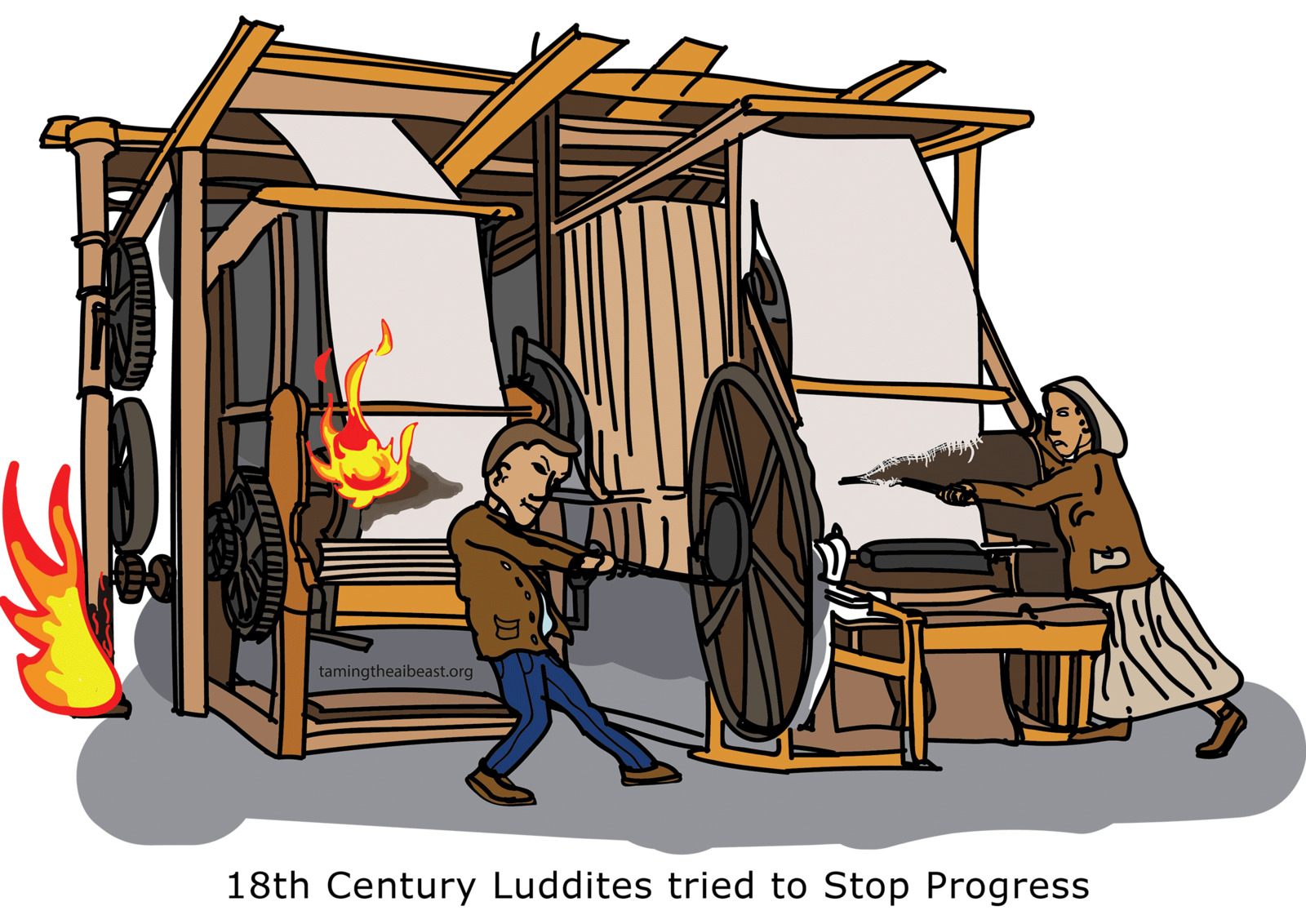
Today in Labor History April 11, 1812: 300 Luddites attacked Wroe & Duncliffs Manufacturing, in Rawfords Hill, England. They destroyed the machinery that was replacing them and throwing them out of work. Then they set fire to Wroe & Duncliffs. Mobs also attacked the William Cartwright mill, in Liversedge.
1910s

April 11, 1912: IWW Coal miners in northern Colorado won their strike.
Today in Labor History April 11, 1914: IWW tobacco workers in Chicago won their demands after 19 weeks of being on strike.
April 11, 1916: IWW quarry workers, striking in Lohrville, Wisconsin, won their demands.
1920s-1930s
Today in Labor History April 11, 1920: An IWW crew operating the Chicago Express train, in New York, pulled into a siding and abandoned the train. They took this job action in order to attend IWW-aligned railroad workers’ meeting. After their meeting, they delivered only the milk and mail cars, but left the passenger cars in the siding.
April 11, 1934: The Ku Klux Klan kidnapped and murdered Frank Norman, in Florida. They did this because he helped organize all citrus workers, regardless of race.
1940s
Today in Labor History April 11, 1941: The Ford Motor Company signed its first contract with the United Auto Workers.

April 11, 1947: Jackie Robinson played his first game with the Brooklyn Dodgers. Thus, he became the first black baseball player to play in the major leagues.
1960s-1970s
Today in Labor History April 11, 1968: President Johnson signed the Civil Rights Act of 1968. This barred racial discrimination in housing and other areas. However, the Act also made it a crime to cross state lines with the intent to incite a riot. Thus, it gave the government a new tool to prosecute labor and other protest organizers.

April 11, 1974: A court found United Mine Workers President W. A. “Tony” Boyle guilty of first-degree murder. He had ordered the 1969 assassination of union reformer Joseph A. “Jock” Yablonski.
1980s
Today in Labor History April 11, 1980: An eleven-day strike by 34,000 New York City Transit workers ended with management agreeing to a 9% raise.
April 11, 1980: The Equal Employment Opportunity Commission issued regulations prohibiting sexual harassment in the work-place.
April 11, 1986: Police arrested 17 striking Hormel meatpackers after tear-gassing them in Austin, Minnesota. The following day, 6,000 people (nearly one-third of the city’s population), demonstrated against Hormel and the police. The strike was eventually suppressed by Hormel, with the collaboration of the state, and the workers’ own union.
1990s-2000s
Today in Labor History April 11, 1981: A massive riot broke out in Brixton, in south London. Nearly 300 police were injured, along with 65 serious civilian injuries. The Clash song, Guns of Brixton, came out before the riots. But its lyrics convey the discontent felt in the neighborhood over poverty and police brutality.
Today in Labor History April 11, 1993 – Four hundred fifty prisoners rioted at the Southern Ohio Correctional Facility in Lucasville, Ohio. They continued to riot for ten days because of terrible conditions in the prison, as well as the forced vaccination of Nation of Islam prisoners.
April 11, 1997: 25,000 people marched in Watsonville, CA in support of the United Farm Workers organizing campaign for strawberry workers.

Today in Labor History April 11, 2007: Author Kurt Vonnegut died on this day. Vonnegut served during WWII and was captured by the Nazis. He survived the allied bombing of Dresden inside the meat locker of the slaughterhouse where he was imprisoned. The bombing, which has been called a war crime, killed as many as 25,000 people. The experience inspired Vonnegut’s book, Slaughterhouse Five. He also wrote, Welcome to the Monkey House, Breakfast of Champions, Player Piano and Cat’s Cradle, among others. Nominally a socialist, he believed the only two parties in America were the Winners and the Losers. I saw him speak on the UC Berkeley campus, during the anti-Apartheid protests of the 1980s.