
Today in Labor History April 16, 1520: The Revolt of the Comuneros began on this date in Spain. The social elites of Castile rose up against King Charles I. They were fearful that the Flemish-raised king would not support their interests. However, the uprising quickly took on a radical anti-feudal character, with peasants rising up against their feudal lords. And it spread to Toledo, Valladolid, and other towns, too.
1800s

April 16, 1854: Jacob Coxey was born on this date in Masillon, Ohio. Coxey was a populist businessman. He proposed ending the 1893 depression by issuing Treasury notes to pay for a work-relief program. When Congress refused to pass his bill, he led an “Army of the Poor” from Ohio to Washington, DC. The police arrested Coxey and his lieutenants and beat up 50 of his followers.

Today in Labor History April 16, 1884: Anatole France was born on this day. He was a poet and novelist and won the Nobel Prize for literature in 1921. Many of his works satirized religious and political ideas. He signed Emile Zola’s letter in support of Dreyfus, a Jewish army officer falsely accused of espionage.
April 16, 1889: Charlie Chaplin was born on this day. In addition to being a brilliant comic actor and film maker, he opposed nationalism and fascism. He criticized HUAC, the trials of Communist Party members, and even capitalism, itself. Consequently, J. Edgar Hoover launched a smear campaign against him.
1910s
Today in Labor History April 16, 1916: 25,000 garment workers in New York City were locked out by employers in a dispute over hiring practices. The International Ladies’ Garment Workers Union called for a General Strike. 60,000 workers struck for 14 weeks. As a result, they won union recognition and the contractual right to strike.
1940s

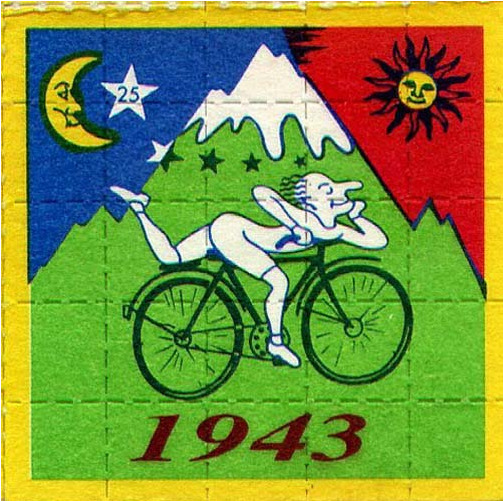
April 16, 1943: Albert Hoffman accidentally discovered the hallucinogenic effects of LSD on this day. And workers could soon afford to take inexpensive trips without ever leaving their homes.

Today in Labor History April 16, 1947: A series of explosions and fires occurred at an oil refinery in Texas City, Texas. 2,300 tons of ammonium nitrate on board a ship docked in the port of Texas City detonated, setting off a chain reaction of explosions and fires on other ships and nearby oil storage facilities. At least 581 people were killed and thousands more were seriously injured in the deadliest industrial disaster in U.S. history. As a result, changes in chemical manufacturing and new regulations for the bagging, handling, and shipping of chemicals were enacted.
1990s-2000s

Today in Labor History April 16, 1994: Ralph Ellison died on this day. Ellison was a member of the Harlem Renaissance, best known for his book, The Invisible Man. He was friends with Langston Hughes and Richard Wright. He became active in the Communist Party, as did many of his peers. But he became disillusioned with them during World War II when he felt they became reformist. He wrote The Invisible Man during this era, in part, as a response their betrayal.
April 16, 2000: Thousands protested in Washington, D.C. at meetings of the World Bank and International Monetary Fund One against policies that aid corporate profits while increasing poverty and environmental degradation.