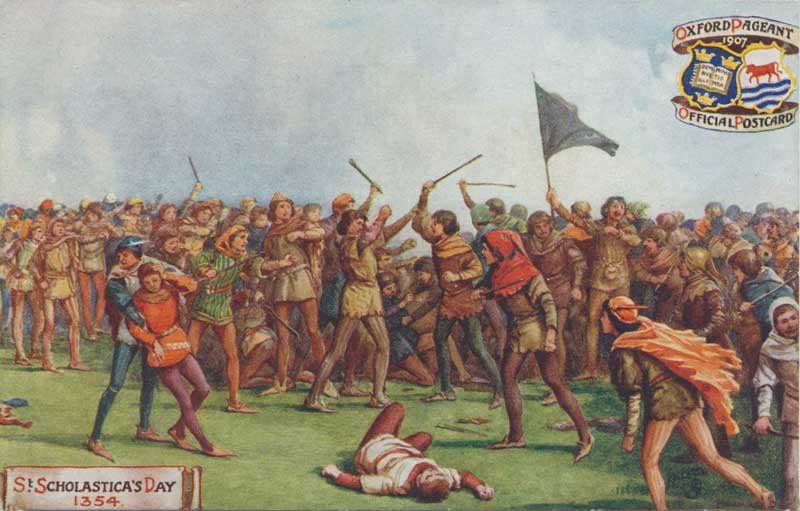
Today in Labor History February 10, 1355: The St Scholastica Day riot broke out in Oxford, England. 63 scholars and up to 30 locals died in rioting. It started when two students from the University of Oxford complained about the quality of wine in a Tavern. The students’ quarrel with the tavern-keeper escalated to blows. Other customers joined in and the melee turned into a riot. The violence continued for over three days, with armed gangs coming in from the countryside to assist the townspeople. Violent disagreements between townspeople and students were common, due in part to privileges the crown gave to the university at the town’s expense.
1700s
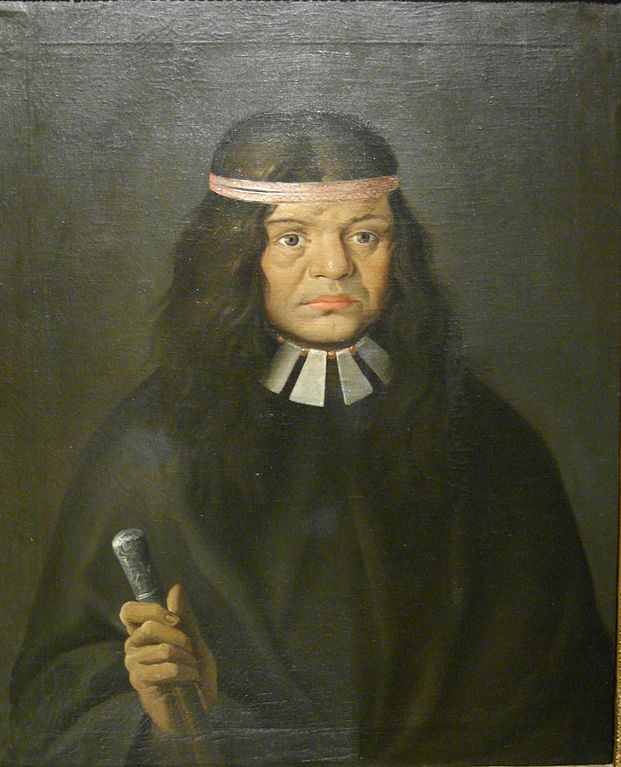
Today in Labor History February 10, 1712: Huilliches in Chiloé, Chile rebelled against the Spanish, attacking the houses and haciendas of Spanish nobles. They killed many and burned down their homes in struggle for independence. However, a Spanish militia put down the rebellion, killing over 400 Huilliches.
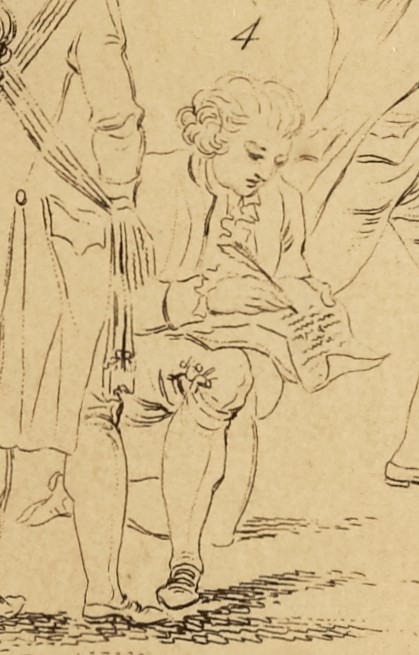
Today in Labor History February 10, 1794: The French revolutionist Jacques Roux (1752-1794) committed suicide on this date in his Paris prison cell. Also known as the “Red Priest,” Roux denounced those monopolizing the revolution, the speculator, the merchant, government and the parliamentary state. Roux anticipated many of the themes that Karl Marx would later develop. Roux’s rhetoric inspired food riots during his day and discord in the Paris Commune, later. The Committee for Public Safety, during the French Revolution, imprisoned him. He killed himself in prison.
1890s
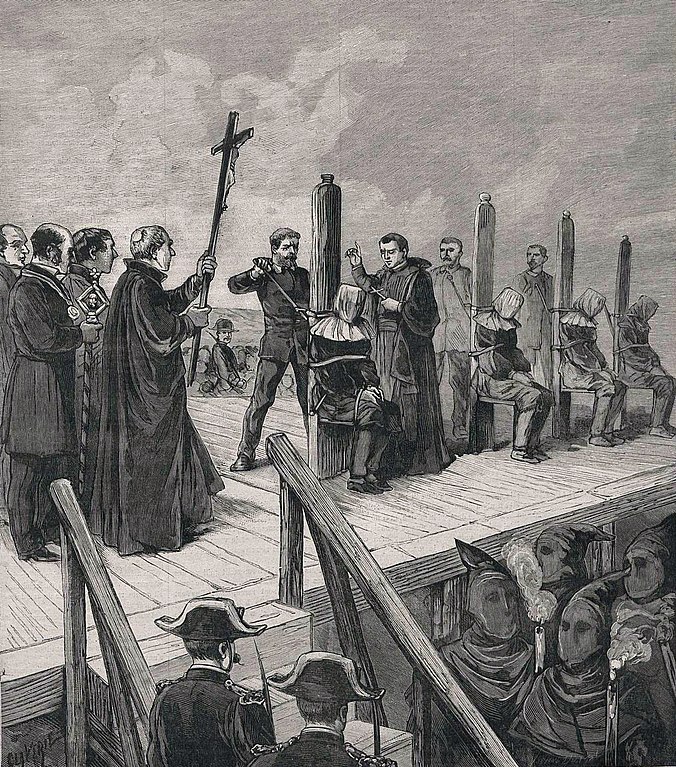
Today in Labor History February 10, 1892: Four farmworkers were executed during the repression following the January 8 uprising in Jerez, Andalusia, setting off new waves of violence. In January, hundreds of farm workers calling for “social revolution,” took over Jerez. On September 24, 1893, anarchist Paulí Pallàs tried to assassinate Catalonia Captain General Arsenio Martínez Campos during a military parade in Barcelona in retaliation for the state repression of the Jerez uprising.
Today in Labor History February 10, 1898: Marxist playwright Bertolt Brecht was born. Brecht was a doctor, poet and playwright. He fled the Nazis only to be persecuted in the U.S. by HUAC during the Cold War. He is most well-know for his play, “The Three Penny Opera.” He also wrote “Mother Courage and Her Children” and “The Days of the Commune,” about the Paris Commune. Additionally, he wrote poetry and composed the lyrics to many of the songs performed in his plays, like “Mack the Knife” and “Alabama Song” (AKA Whiskey Bar).
1910s
Today in Labor History February 10, 1913: Rubber workers belonging to the Industrial Workers of the World went on strike in Akron, Ohio. It was one of the most effective organizing drives to date among the rubber workers of Akron. However, the bosses still crushed the strike with vigilantes and martial law. In 1936, they went on a sit-down strike.
1930s
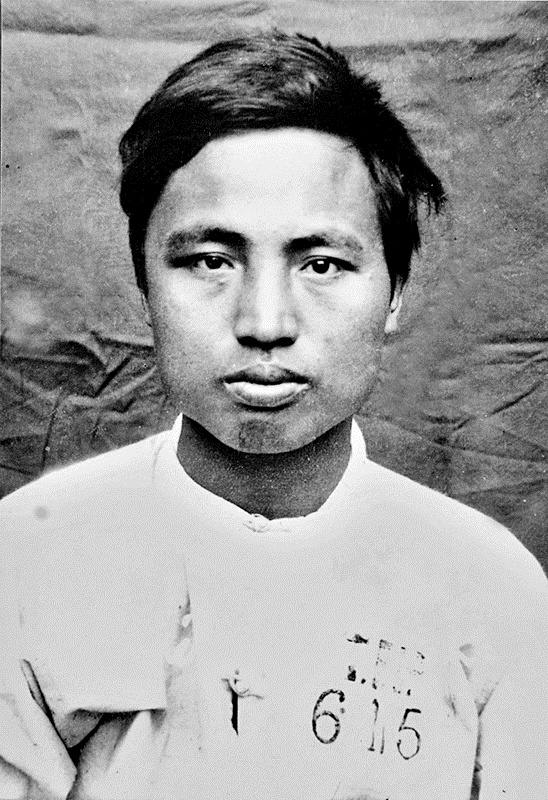
Today in Labor History February 10, 1930: The Việt Nam Quốc Dân Đảng launched the failed Yên Bái mutiny in hope of overthrowing French control. Vietnamese soldiers in the French colonial army mutinied in collaboration with civilian supporters. They hoped to inspire a wider uprising among the general populace to overthrow the colonial regime and establish independence. No one knows how many died in the fighting. However, the French colonial authorities executed 13 leaders of the mutiny.
Today in Labor History February 10, 1932: The CNT called a General Strike in Catalonia, leading to an insurrection. Within a week the Catalan city of Terrassa was taken over and anarchist communism was declared.
February 10, 1939: Spanish Civil War: The Nationalists completed their conquest of Catalonia and sealed the border with France.
1940s-1980s
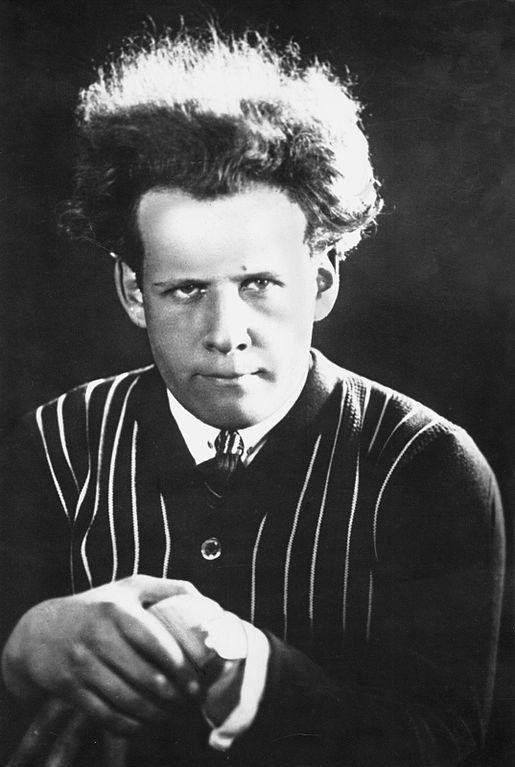
Today in Labor History February 10, 1948: The great Russian filmmaker Sergei Eisenstein died on this date (“Battleship Potemkin,” “Ivan the Terrible,” “Ten Days That Shook the World“).
February 10, 1984: Kenyan soldiers killed an estimated 5000 ethnic Somali Kenyans in the Wagalla massacre.